
Everyday tools for stiffer hands
Daily living aids for hands and home
A joint pain aid is usually a small one. The tools that help most are the ones that quietly take one awkward movement out of your day — the bend, the twist, the extra-hard grip.
Start small, stay reversible
Why small tools beat big changes
Two-aid rule
Two aids you actually use every day are worth more than six that sit in a drawer. Buy one, live with it for a fortnight, then decide what is next.
A reacher grabber doesn't make your hands stronger. It just means you don't have to bend and twist to get something off the floor. That's the whole value, and it's enough. A bath step doesn't improve your knees; it reduces the height you have to step. Small, portable, reversible.
This is why we'd suggest starting with these rather than structural changes to your home. You learn what you actually use before spending money on anything fixed. A grabber you keep by the sofa, a step you lift out when you need it, a jar opener on the counter — tools earn their place by being picked up without a second thought.
- Cost of a fixed change
- High, and hard to undo if it turns out not to suit you.
- Cost of a portable aid
- Low. If it doesn't help, it moves to a cupboard.
- What you learn first
- Which movement is actually costing you the most each day.
No bending, no twisting
Reacher grabbers
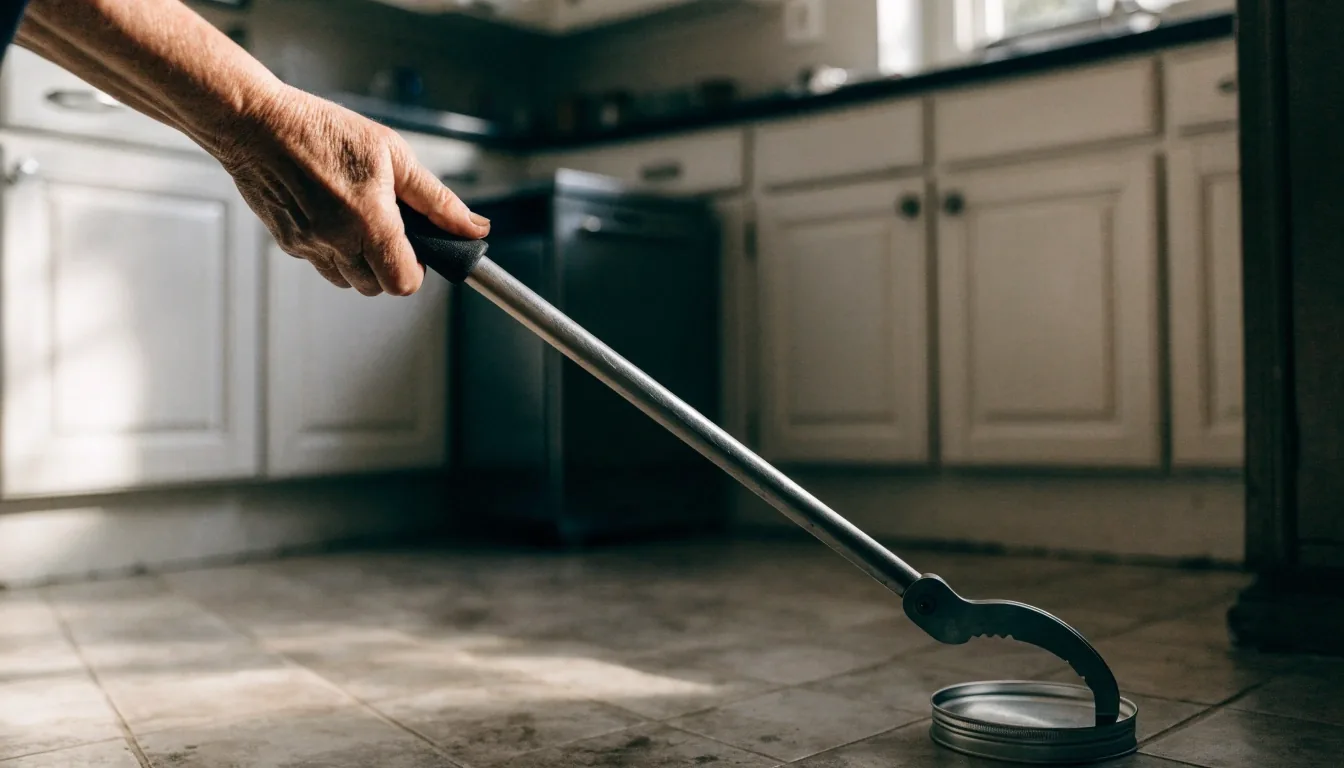
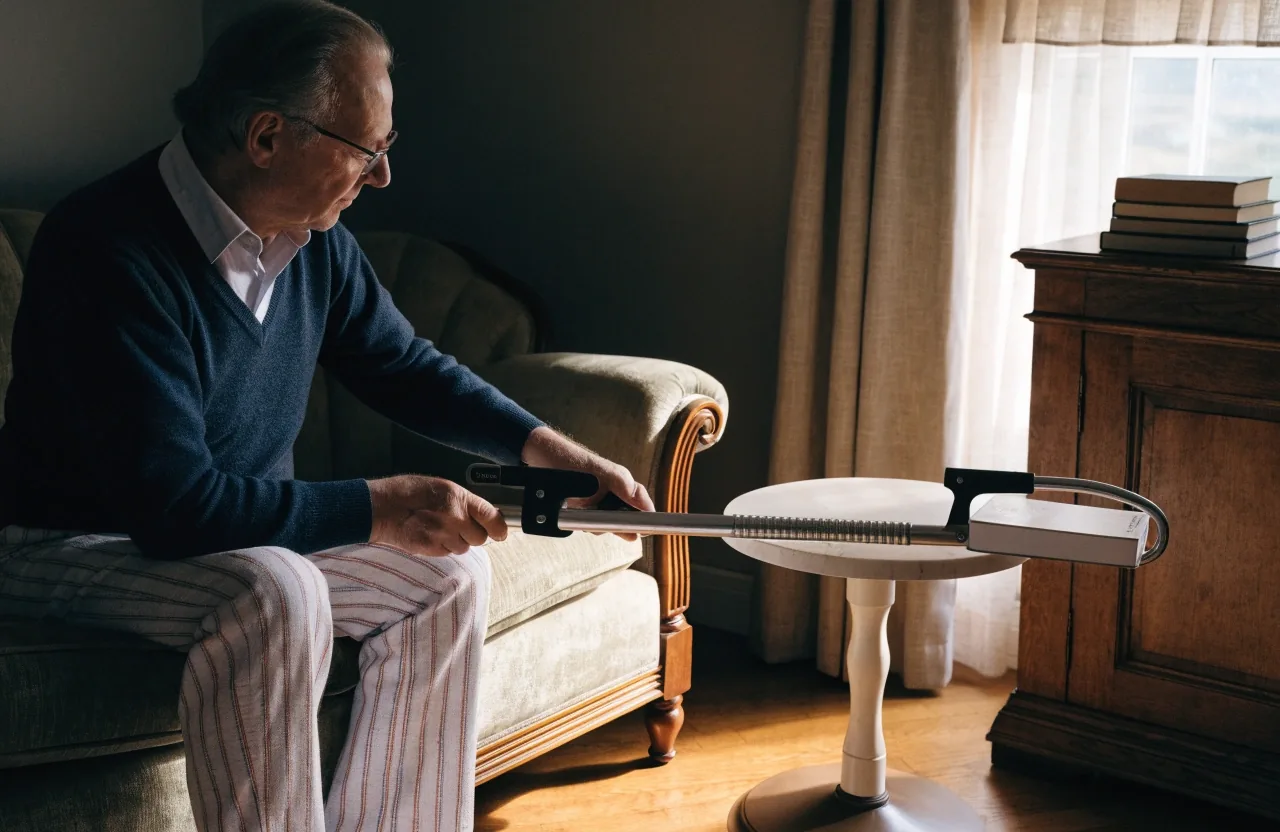
The Classic Reacher Grabber, sold through Arthritis UK Shop, is designed to pick up items from the floor or from behind furniture without bending or twisting. It has a built-in dressing post, a hooked trigger, and a non-slip jaw.
Dressing post
Helps with socks and sleeves — the post holds the fabric while you pull, so you are not curling forward to reach your own feet.
Hooked trigger
Lets you pull things towards you — a bag strap, a towel off a rail, a cable you've dropped behind a desk.
Non-slip jaw
Grips small items reasonably well. If you drop things often, or if getting down to the floor is a problem, this is one of the first aids worth having.
That combination covers more than the name suggests. Keep it standing beside the chair you use most rather than folded away; a tool you have to fetch is a tool you won't use. If you want a joint pain aid you can reach for without thinking, this is the one most people start with.
Independence is easier to keep than to regain. A small tool used consistently holds onto more of it.
Bath steps and bathroom confidence
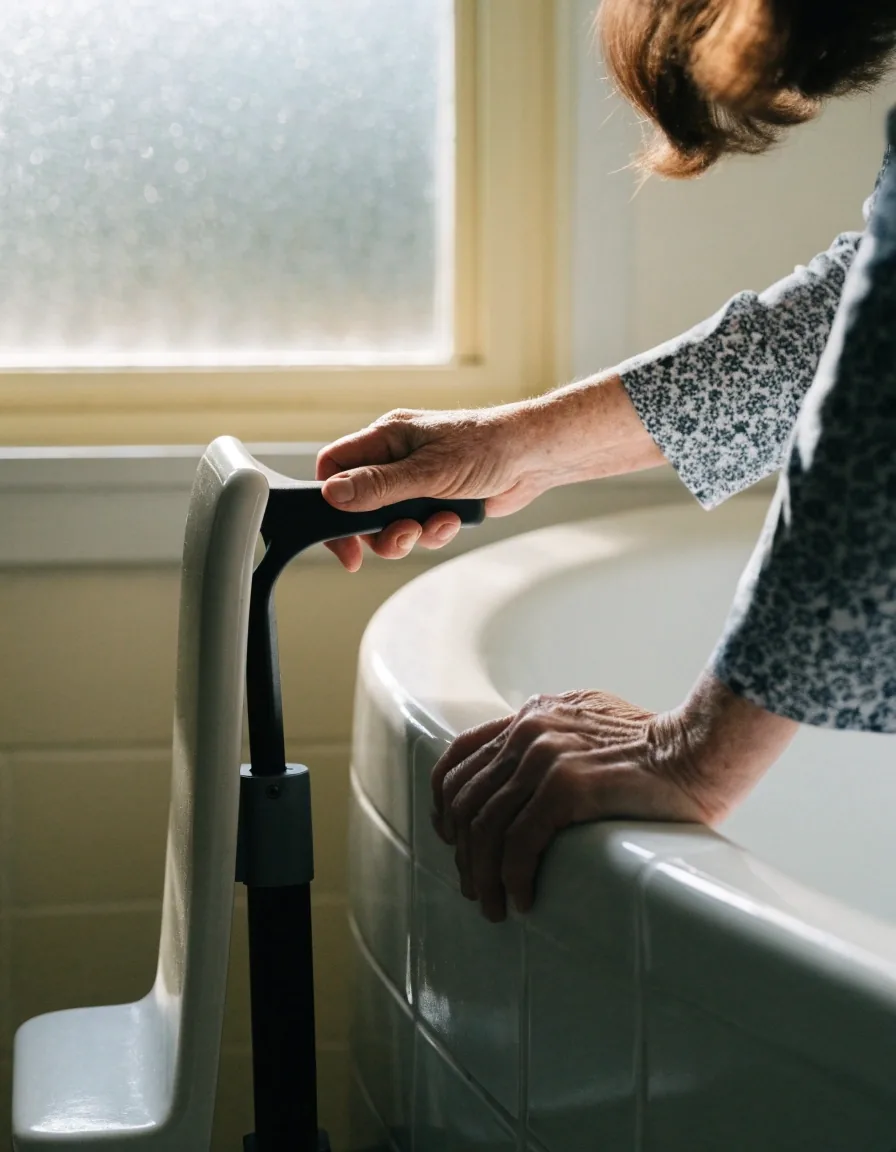
The Bath Step, also sold through Arthritis UK Shop, is designed to help people get into and out of the bath with more confidence. It has a stable non-slip platform and a handle, and the description notes it reduces the height needed to step in or out.
The bathroom is where limited movement causes the most anxiety, because falling there is a real risk. Reducing the step height is a small change with a large effect. If you share a bathroom, the step lifts out of the way rather than being a permanent installation.
Kitchen aids that earn their place
Grip is tested hardest in the kitchen. A jar opener, a tap turner, and a lighter kettle cover most of the daily friction. Sitting down to prepare vegetables removes a long period of standing, which many people find helps more than they expect.
Jar opener
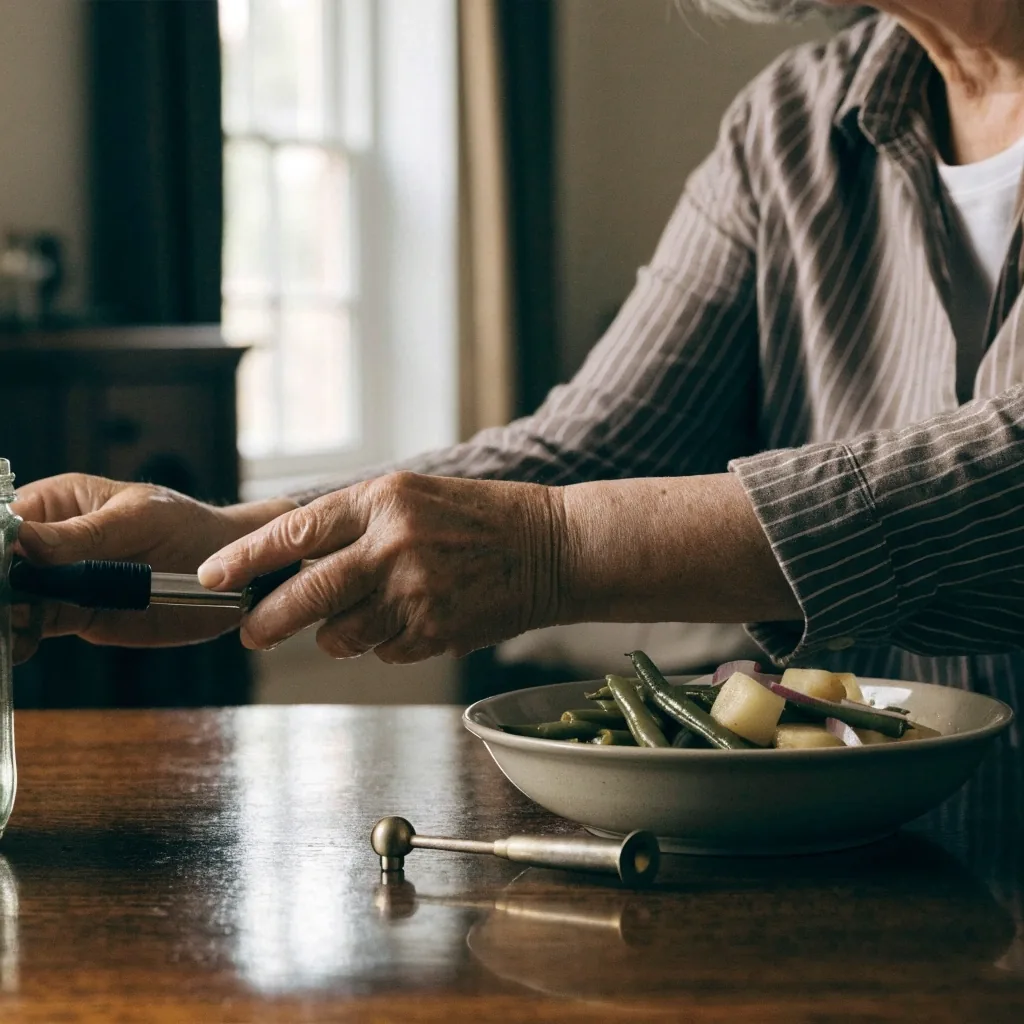
Turning a lid against a fixed grip is one of the hardest kitchen tasks for stiff hands. A wall-mounted or handheld opener does the twisting against the tool instead.
Tap turner
Gives you a longer lever so you need less pinching force on a stiff tap. Useful when hands feel weakest first thing in the morning.
Lighter kettle
A smaller fill weighs less to lift and pour. Fill only what you need for the cup you are making and the lift drops straight away.
Stool for prep
Sitting to chop puts your work at a comfortable height and cuts the standing time — often the change people notice first. It also makes the job easier to interrupt and come back to.
If your hands swell after cooking, compression gloves might be worth trying during the task rather than afterwards. Our warmth and compression page compares the options.
Dressing without a struggle
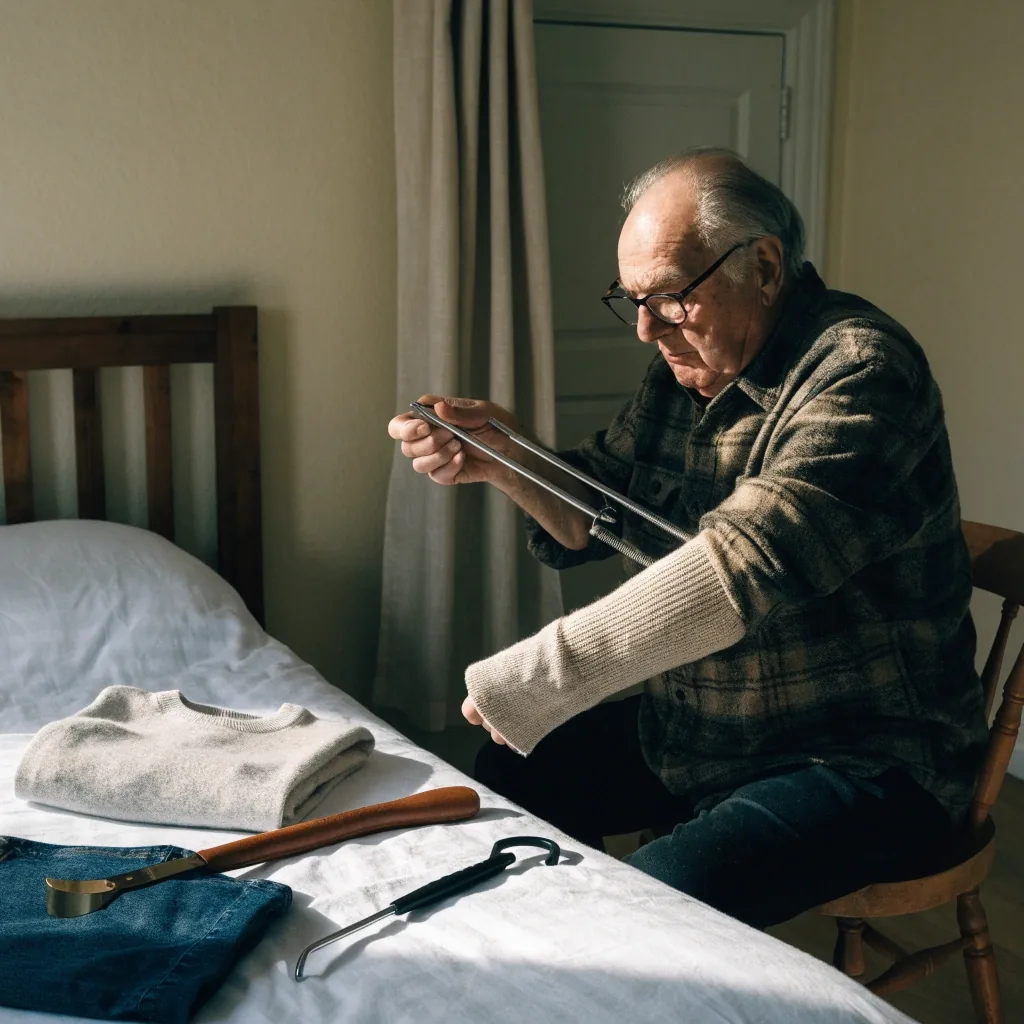
Socks, sleeves, and buttons are the three usual trouble spots. A reacher grabber with a dressing post helps with the first two. A button hook handles the third. Slip-on shoes and a long-handled shoe horn remove another daily bend.
Socks
Dressing post holds the sock open at a reachable height while you push your foot in.
Sleeves
The same post holds a shirt cuff while your arm goes through instead of your shoulder doing the work.
Buttons
A button hook loops the button through the hole so you don't have to pinch it between two fingertips.
Shoes
Slip-ons plus a long-handled shoe horn — no bending, and nothing to tie first thing in the morning.
Laying clothes out the night before sounds trivial and isn't. Deciding what to wear while already stiff and rushed is when people ask for help they'd rather not need. Doing it the evening before takes the pressure off, and it means the first ten minutes of the day are calmer and quicker. A chair at the end of the bed, a shoe horn on the wardrobe shelf, and tomorrow's clothes folded on top of it — that is the whole setup.
Aids for the car and outdoors
The same logic applies outside the house. A key turner, a wider-grip steering wheel cover, and a cushion for a low car seat all reduce load. If you use a stick or a walking aid, a holder for it means you're not leaning it against a wall where it falls.
None of these are medical devices and none of them need a prescription. They're just tools that suit a particular difficulty, and it's fine to buy one, try it, and decide it isn't for you. There is no commitment and nothing to arrange in advance.
Key turner
A wider grip on a key so you twist with the palm rather than two fingertips — helpful on cold mornings.
Steering cover
Takes the pressure out of the hand when you hold the wheel for a longer drive.
Seat cushion
Raises a low car seat so getting in and out uses less knee bend.
Walking-aid holder
Keeps a stick or frame upright and reachable instead of leaning on a wall where it can slide.
Pick one, not six
Where to start
Pick the task you avoid most. If you've started asking someone else to get things off the floor, start with a grabber. If you've stopped having baths because getting in feels risky, start with the step.
Fortnight
Use the first aid for a fortnight before adding anything else. That two-week window is when you find out whether it genuinely fits your routine.
Two aids, used daily
Worth more than six that sit in a drawer. If a tool lives somewhere awkward, move it to the spot where the task happens.
Then review
After two weeks, ask which movement still costs you most. That answer tells you what the next aid should be — not a catalogue or a wishlist.
Keeping them useful
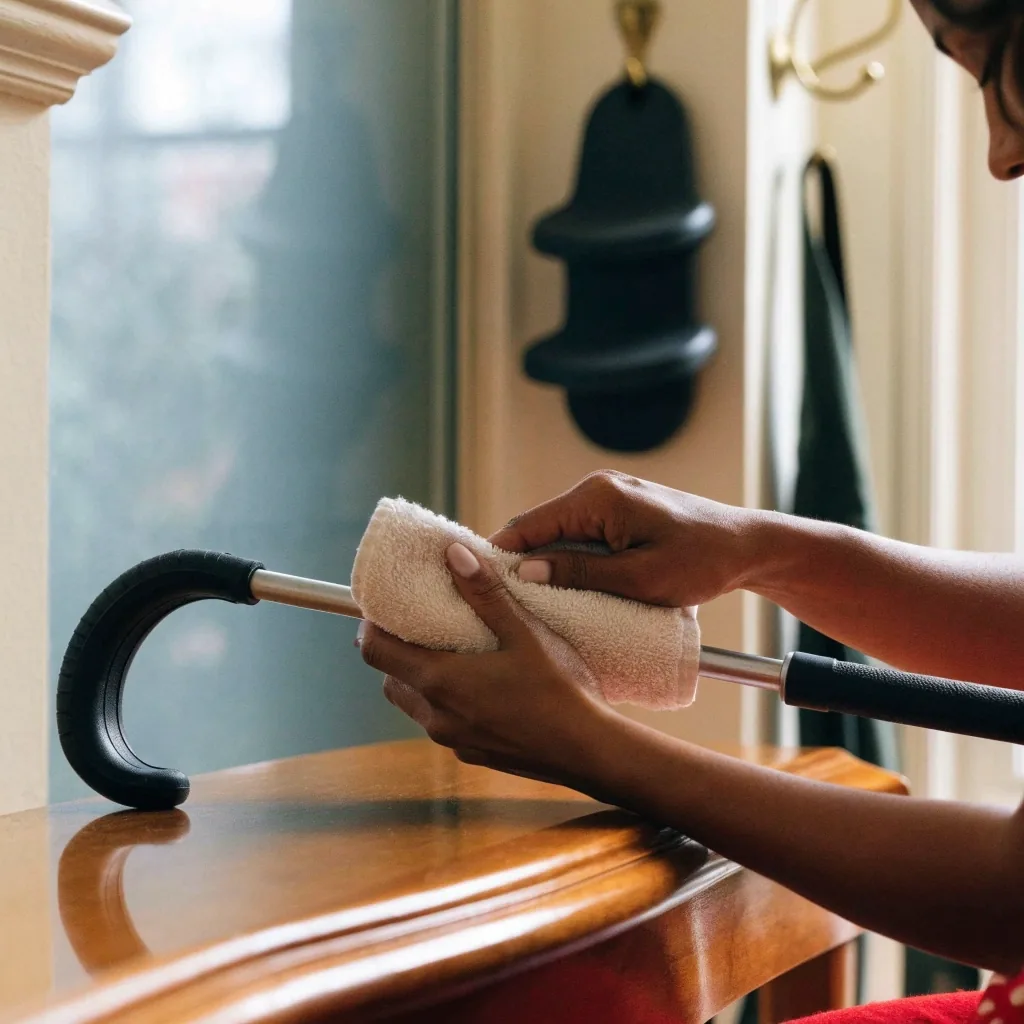
Check non-slip surfaces periodically, particularly on anything used in the bathroom where soap and water build up. Wipe grips clean so they don't lose their hold. If a handle feels loose, stop using it and replace it.
A monthly two-minute check is enough: press the jaw closed, twist the handle, look at the rubber feet on the bath step. Slippery feet are the usual reason a step suddenly feels less steady.
-
Wipe the grips
A damp cloth on the jaw and handle. Soap film is what makes a grip feel unreliable rather than the rubber wearing out.
-
Check the feet
On a bath step, press each non-slip foot to make sure it is still sitting flush against the platform.
-
Test the action
Open and close a grabber jaw a few times. A trigger that has lost its spring-back is a sign the aid has had enough use.
-
Replace, don't repair
If a handle feels loose or a joint rattles, take it out of use and get another one. These are inexpensive tools and not worth working around.
The point of all of this is independence, and independence is easier to keep than to regain. A small tool used consistently is one of the simpler ways to hold onto it — support joints daily with the small habits, and the bigger tasks stay in reach.

Not sure which aid suits you?
Tell us the task you have started avoiding — the low cupboard, the bath, the jar that won't move. We can point you at the tool that fits it, and say plainly if something you already own will do the job.
Prefer to call? +44 1273 338975, Monday to Friday 9:00 AM – 6:00 PM and Saturday 10:00 AM – 2:00 PM. You can also write to 14 Calverley Road, Tunbridge Wells, Kent TN1 2TH.
Questions people ask before buying
Do I need a referral before I buy a grabber or a bath step?
No. These are everyday household tools, not medical devices, and they can be bought directly. That is also why it is worth trying one at low cost before committing to anything more involved at home.
How long is a reacher grabber?
Long enough to reach the floor from a seated or standing position without folding forward. If you are tall, check the stated length before ordering — a short grabber makes you stoop and defeats the point.
Will a bath step fit my bath?
It stands on the floor next to the bath rather than being fixed to it, so it works with most standard UK baths and lifts away when someone else wants the bathroom. Check the platform height against the bath rim before you buy.
How many aids should I buy at once?
One or two. Buy for the single task you avoid most, use it daily for a fortnight, then decide what else is worth adding. Buying a set in advance usually means half of it stays unused.
What if an aid turns out not to suit me?
That is a normal result, not a failure. Keep the one that stuck and pass the other on. The cheap, portable nature of these tools is exactly what makes trying them low-risk.