Calverley Timber Works Calverley
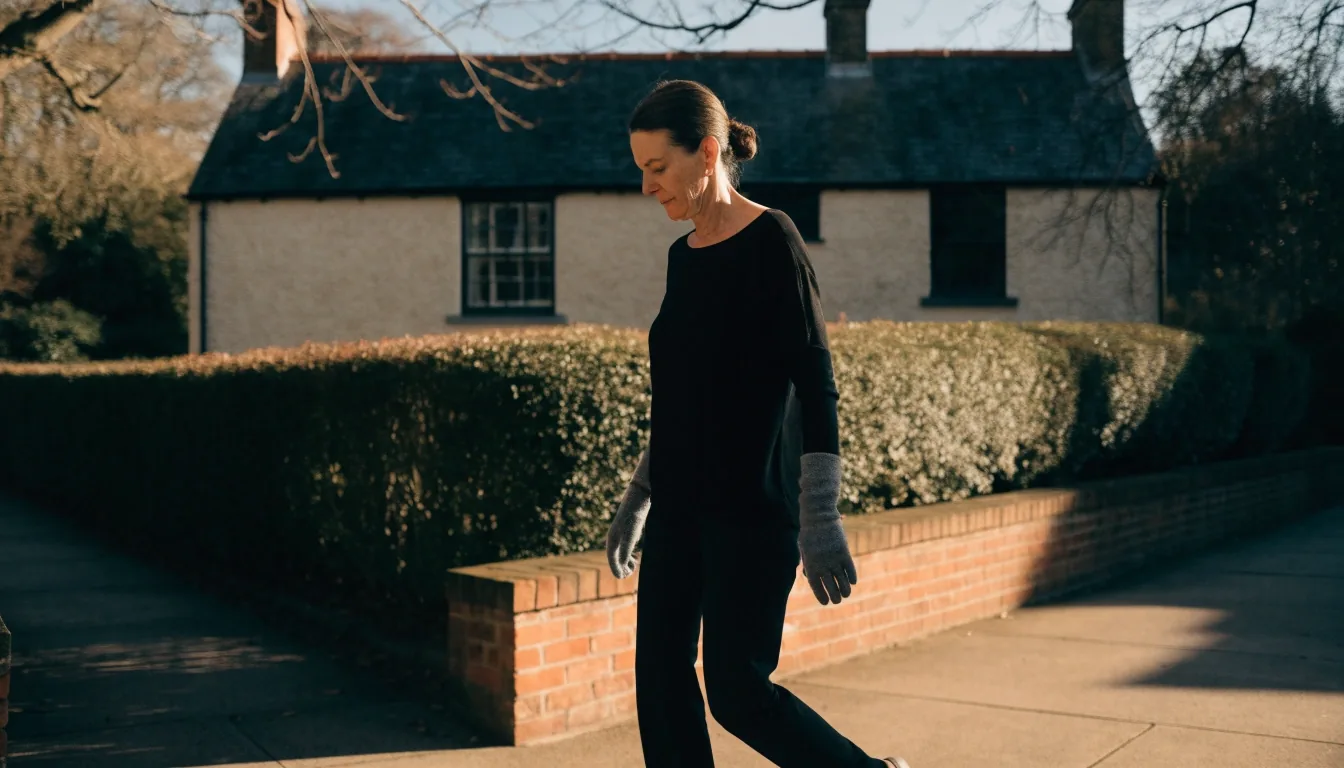
A woman walking a short flat route along a quiet residential pavement on an autumn afternoon

Low-impact movement you can do at home

Movement is the part of joint care people skip, usually because the advice sounds like a gym plan. It doesn't have to be. What helps most at home is short, regular movement that fits around your day, not a programme you'll quit in three weeks.

Movement is maintenance, not a personal best

Walks get sold as an achievement. For stiff hands and knees, they work far better understood as upkeep: a short, flat, familiar route you take without arguing with yourself first. Ten minutes, most days, six days a week, does more for how your body feels in the morning than one long session at the weekend.

This page is for people who want to keep moving without a gym, a class timetable, or a plan that falls apart the first week they feel rough. Everything below can be done at home, in the street outside, or at a local pool.

Keep it short

A routine you can finish on a bad day beats an ambitious one you skip. Set the bar deliberately low.

Keep it regular

Frequency is what keeps range and loosens the first twenty minutes of the day. Little and often wins.

Keep it supported

Using a stick, a chair, or a rail is part of doing the movement well. There is no version where you leave the aids at home to prove something.

Keep a note

One line a day: what you did and how it felt. A month of that is more useful to a physiotherapist than anything you could recall from memory.

What counts as low-impact

The NHS advises low-impact exercise such as swimming, walking, pilates, and yoga. Those four cover a lot of ground between them, and none require you to be fit already. The point is to keep the movement you have, gently and often. If all you can manage today is a slow walk to the end of the road, that is the version that counts.

Walking

Free, needs no equipment, and can happen in the ten minutes after lunch. It is also the one people most often over-scope: a short, flat, familiar route beats a longer one you have to talk yourself into.

Easiest starting pointEnd of the road and back, on level ground.
Swimming and water work

Water takes the load off completely, which some people find is the only way to move comfortably for a full session. Lengths are optional; walking in the shallow end and slow arm circles do the same job.

Easiest starting pointA short shallow-end session, then see how you feel tomorrow.

Pilates and yoga

More about range and control than effort. Look for routines labelled gentle, beginner, or chair-based; that wording is a reasonable guide to what is pitched at stiff, older bodies rather than at people who already train.

Easiest starting pointTen minutes seated, chair close by, no floor work.

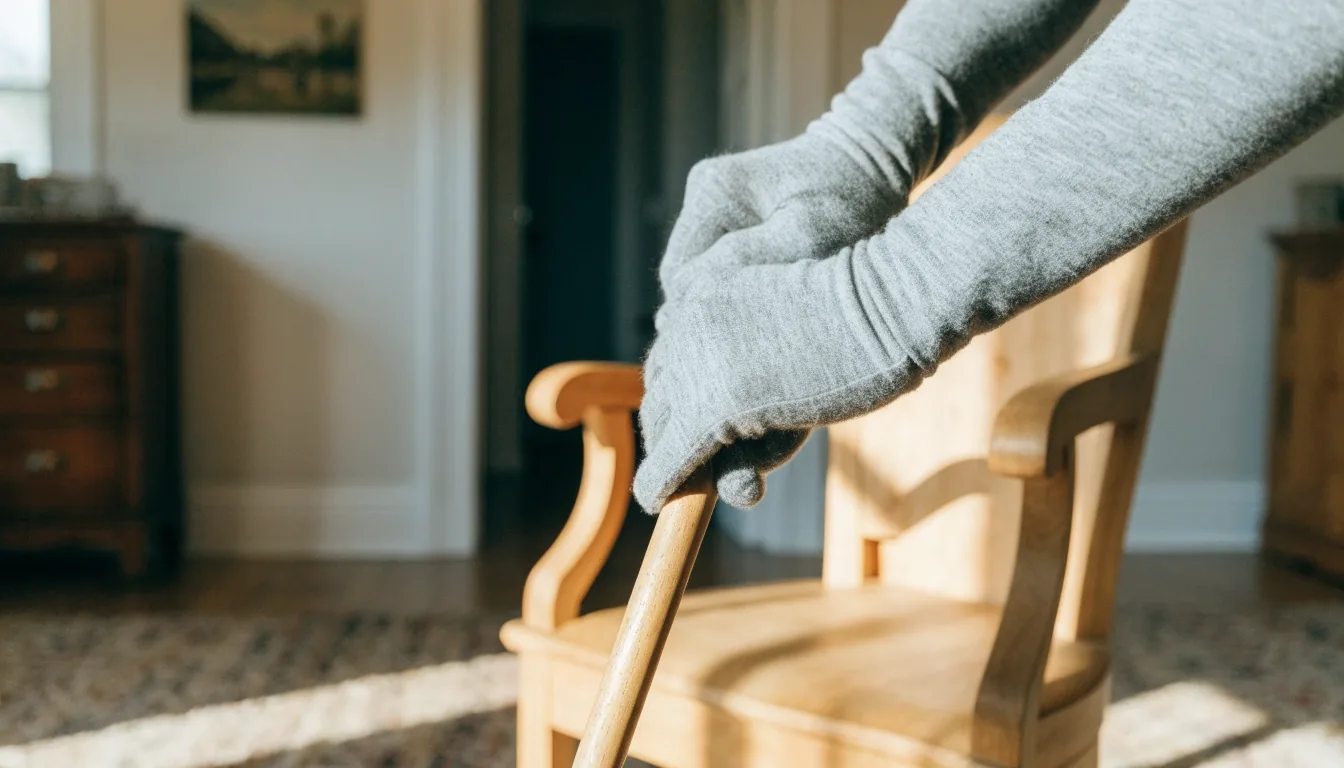
Compression gloves holding a lightweight walking stick beside an armchair in a bright living room

The ten-minute rule

Most people who quit an exercise routine do it because the sessions were too long to sustain, not because the movement was wrong. Ten minutes a day, six days a week, will do more for the way you move than an hour every Sunday.

If ten minutes is too much, start with five. If five is too much, start with a warm shower and moving each hand and knee slowly through the range it has while you are still in there. That is a legitimate first week.

A week that survives

  • Six days of ten minutes, one day off without guilt.
  • Half the sessions can be hand and ankle work done sitting down.
  • On a rough day, drop the level rather than stopping altogether.
  • Warm up first: heat before you move makes the first five minutes easier.

Walking: the version nobody describes

Practical details are what make the difference between a walk that helps and a walk that puts you off for a fortnight. None of them are heroic.

Pick the ground first

Level surface if slopes are hard. A flat loop around your own streets beats a scenic route with a hill in the middle.

Pick the time

Go when the pavements are quiet rather than at school pickup. Fewer people to dodge means fewer sudden stops and turns.

Mind your shoes

A bit of cushioning underfoot helps far more than a stiff sole, especially on pavements and paving slabs.

Take the support

If you use a stick, a brace, or a walking aid, take it with you. There is no rule saying you leave the aids at home.

Swimming and water work

Water supports your weight, which means you can move through a fuller range than you might manage on land. That is the whole advantage, and you get it without swimming a single length.

If you have not swum in years, treat the first visit as a test rather than a session. Two shorter visits a week usually work better than one long one, partly because you can judge how you feel the next morning before committing to the next visit.

Walking in the shallow end

Ten to fifteen minutes of steady walking against the water's resistance. No skill needed, and you can stop at any point.

Gentle leg swings

Hold the rail and swing each leg forward and back, then out to the side. The water carries the weight so the swing stays smooth.

Slow arm circles

Small circles first, then wider ones. Useful for shoulders that stiffen overnight and take a while to loosen in the morning.

Many UK pools run quieter sessions in the morning or mid-afternoon, and some run sessions specifically for people with long-term joint conditions. Ask at reception what your local pool offers before you plan around a busy weekend slot.

Pilates and yoga at home

Both are easy to adapt at home, and both are easy to overdo if you follow a video made for people without stiff hands and knees. Gentle, beginner, and chair-based routines are the ones to search for.

Keep a chair nearby

Use it for support during standing work, and sit for anything that demands getting up and down from the floor. Getting off the floor is often the hardest part of a home routine, so remove it from the equation.

Props you already own

A rolled towel stands in for a block, and a dressing gown belt or a soft strap does the job of a yoga strap. You do not need to buy anything to start.

Move slowly, then decide

Take a movement to the point of a slow pull, not a jolt, then come back. Range grows over weeks, not within one session.

Stop at sharp pain

Sharp pain is a different sensation from a stretch or a slow pull, and it means stop, not push through. If you are unsure which one you are feeling, stop and ask.

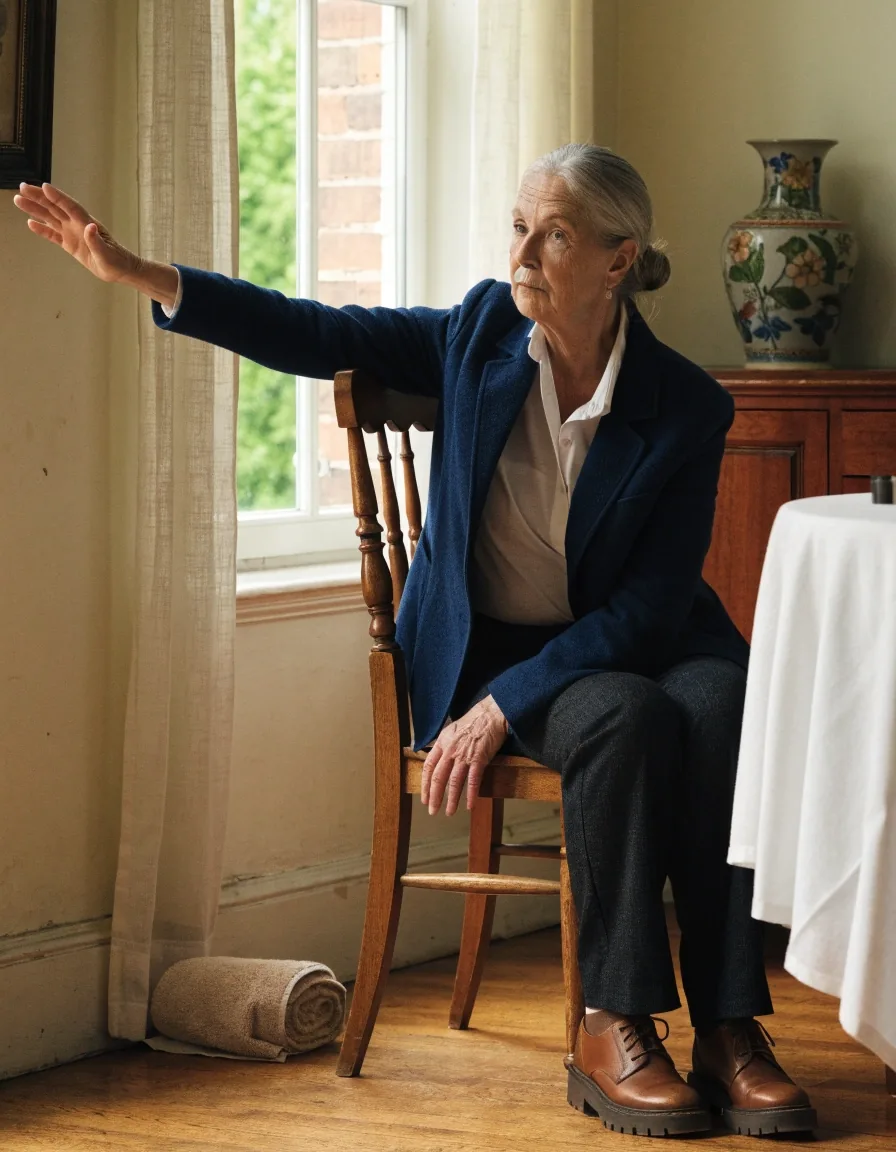
A woman seated on a dining chair extending one arm sideways during a gentle home routine

A chair-based routine removes floor transitions entirely, which is often the deciding factor in whether a home session actually happens.

How much is enough

Aim for something most days rather than a big session once a week. Frequency is what keeps range and eases the stiffness that greets you in the morning, and it is also what turns movement into a habit rather than a project.

Steady day

Ten to fifteen minutes, six days

A short walk, plus hand and ankle movements while the kettle boils. This is the baseline most people can hold.

Rough day

Five minutes, seated

A few slow hand movements, ankle circles, and standing up from a chair a handful of times. It keeps the pattern alive without asking much.

Good day

Add water, or two short walks

On better days, split the movement rather than lengthening it: a second short walk, or a shallow-end session at the pool.

Drop the level rather than stopping altogether when things flare. A few slow hand movements or a short indoor walk keep the routine intact, and picking it back up the next day is far easier than restarting a plan from zero.

Building it into an ordinary day

The routine that survives is the one attached to something you already do. You are not finding extra time; you are hanging movement on a hook that is already in your day.

  • Walk after lunch

    Same route, same time, most days. The decision is already made, so you are not spending willpower choosing whether to go.

  • Hand movements while the kettle boils

    Open and close each hand, touch each finger to your thumb, turn your wrists slowly. Two minutes, twice a day, and it costs you nothing.

  • Knee movement during the adverts

    Sit tall and straighten each leg in turn, hold for a slow count, and lower it. It keeps the knee used to going through its range without any load.

  • Ankles before bed

    Circle each ankle slowly in both directions. It takes under a minute and helps if mornings are the stiffest part of your day.

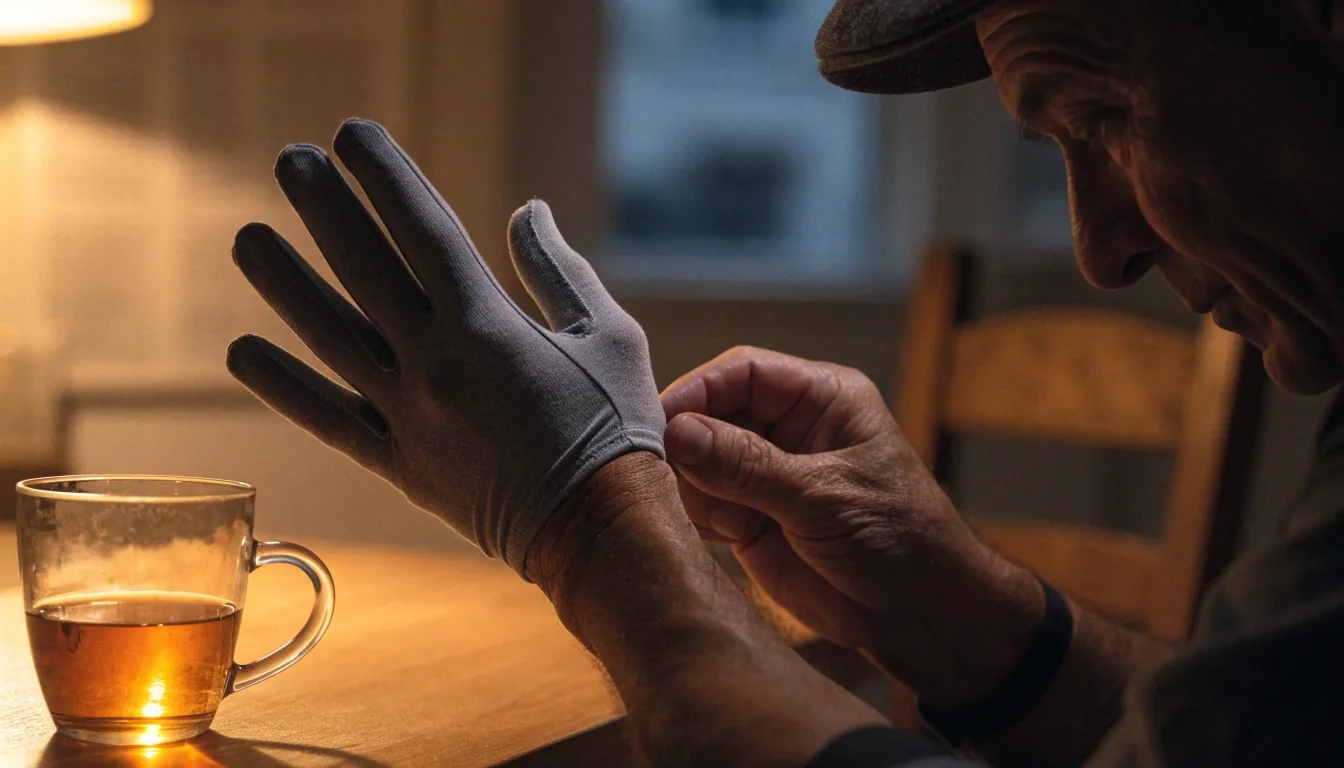
A man writing a short daily note at a kitchen table in warm evening light

When to ease off and when to ask

Some discomfort during movement is common, and it is not automatically a reason to stop. Sharp pain, new swelling, or a knee or hand that locks or gives way is a signal to pause and get advice rather than push on through it.

If movement consistently leaves you worse rather than better over a week or two, that is worth a conversation with a pharmacist or your GP. Bring your notes: what you did, how often, and how it felt. It makes the conversation far more useful than trying to remember.

Ease off

A slow pull or a stretch that eases as you hold it. Reduce the length or the number of repetitions rather than quitting the routine.

Ask for advice

Sharp pain, new swelling, locking, or giving way. Also if two weeks of movement leaves you consistently worse.

Questions people ask before starting

Short answers to the things that most often get in the way of a first week.

Do I need to be able to walk a certain distance first?

No. There is no entry level. Walking to the end of your road and back is a complete session if that is what today allows, and it is worth more than a longer route you cannot repeat tomorrow.

Is it better to do one longer session or several short ones?

Several short ones, in most cases. Frequency is what keeps range and reduces morning stiffness, and shorter sessions are far easier to hold on to across a busy week or a rough patch.

Should I move on a day when everything is stiff and sore?

Drop the level rather than stopping. A few slow hand and ankle movements, or standing up from a chair a handful of times, keeps the habit intact. Heat before you move often makes the first five minutes noticeably easier.

What should I do if a movement makes things worse?

Stop that movement, note what it was, and try a reduced version another day. If a whole week or two of movement leaves you consistently worse, speak to a pharmacist or your GP rather than persisting on your own.

Do I need to buy equipment or props to start?

Not to start. A dining chair, a rolled towel, and a soft belt cover most of what a beginner routine asks for. If you later want support for walking, warmth, or gripping, the daily living aids page sets out what is available and what each item is for.

Start with the smallest version that fits your day

Pick one anchor, one movement, and one honest note a day. Getting movement back into an ordinary week is easier to keep than any plan built on a good week that has not happened yet.

Talk to us

If you would rather ask before you start, we are happy to talk through what might suit your week. Weekdays 9:00 AM to 6:00 PM, Saturdays 10:00 AM to 2:00 PM.

14 Calverley Road, Tunbridge Wells, Kent TN1 2TH, United Kingdom

+44 1273 338975

[email protected]