
Calverley Road, Tunbridge Wells
Warmth, compression and support aids compared
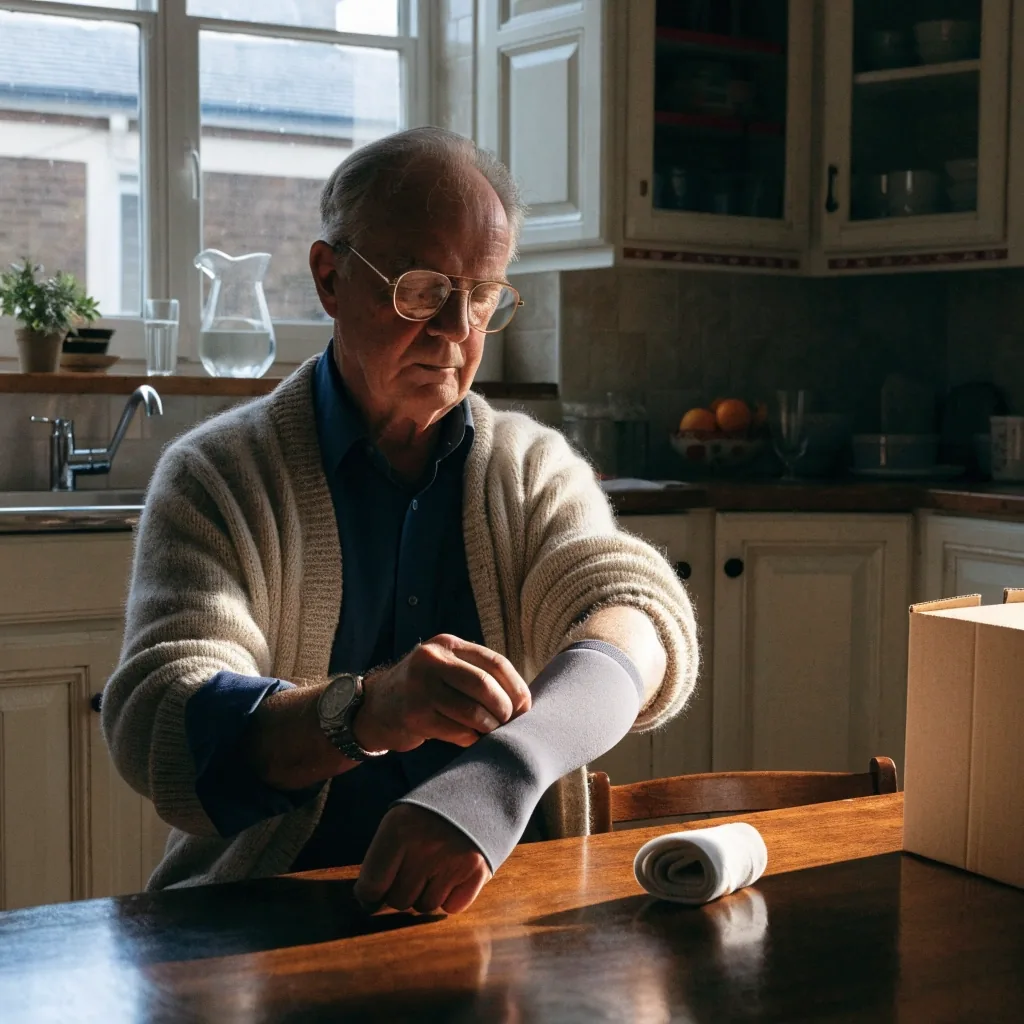
Sleeves, gloves and braces crowd the pharmacy shelves and all read the same. This page sorts the main kinds of home aid by the job each one actually does, so you buy for your morning, not for the biggest box.
The three categories, briefly
What each kind of aid is built to do
Walk into any pharmacy and you will see shelves of sleeves, gloves and braces, all described in similar language. Read them as three separate jobs and the wall becomes readable.
Warmth
One job only: stiff tissue moves a little more easily once it is warm. This is the lightest kind of aid and the one most people can start with.
Compression
A gentle, even pressure across a hand, wrist or knee. The fabric does the work, which is why the fit matters more than the label.
Structure
Rigid panels and hinges add shape, so they can also limit movement in one direction. Choose these when steadiness is the problem.
Most products you will pick up combine two of these. A compression glove is warmth plus light compression. A hinged knee brace is support plus compression with less warmth. Knowing which job you are solving makes the choice on the shelf much simpler, and it is the reason this page separates the three before it compares brands.
Compression gloves
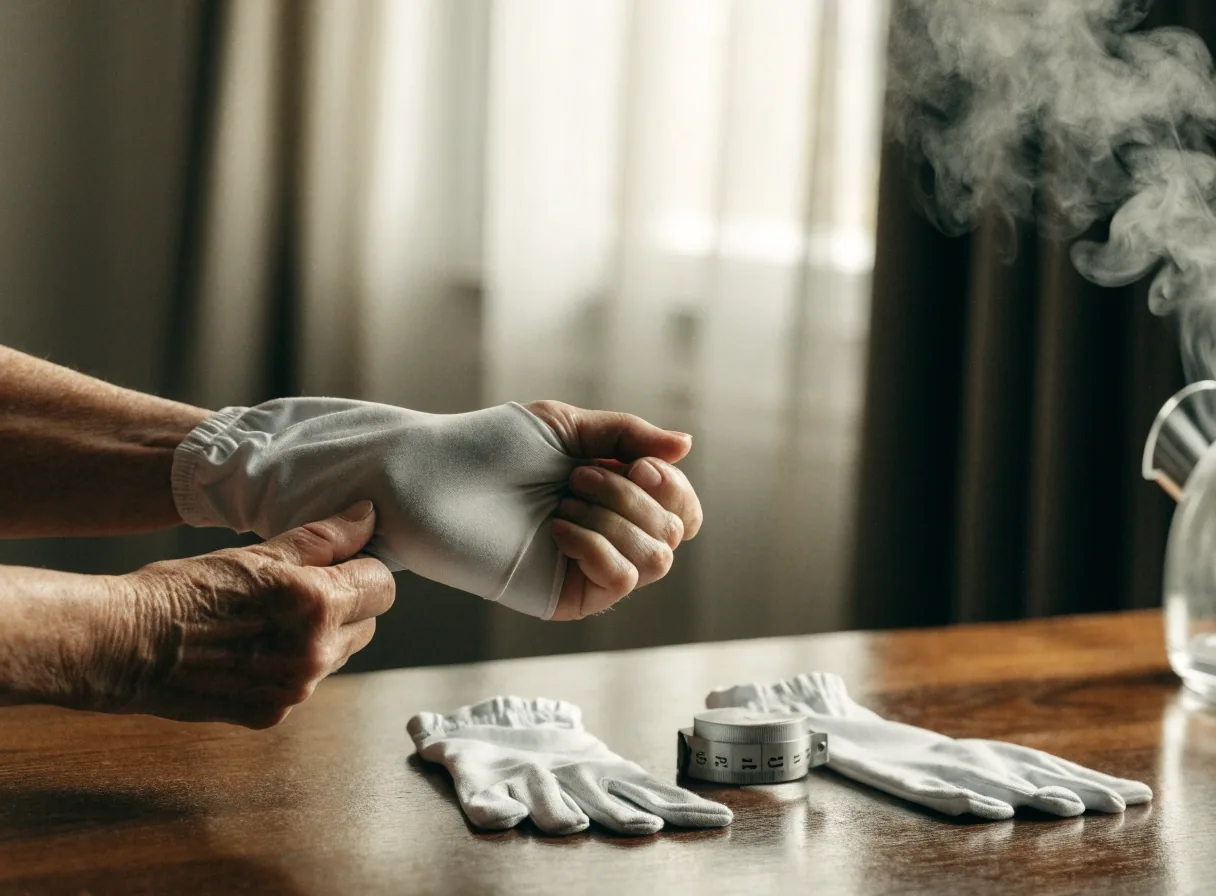
These are among the most commonly used home aids for hands. Actimove describes its Arthritis Care gloves as giving light compression, helping reduce swelling and supporting hand and finger mobility, and frames them for everyday use rather than for sport. Arthritis UK Shop sells compression gloves within its aid range, and Physique lists gloves as an option for stiff hands.
They suit people whose hands feel swollen and stiff, especially first thing in the morning or after a long stretch of gripping. Light compression is the phrase to hold on to. A glove that is hard to haul on is usually the wrong size, not a stronger level of support.
- Good first try when
- Hands stiffen overnight, fingers feel puffy after gripping, or you notice the problem first while cooking and cleaning.
- What to check before buying
- Palm circumference against the maker's guide, whether the seam sits across the knuckles, and whether the fabric is breathable enough to wear through an hour of work.
Support helps you keep doing things. It does not undo wear, and no honest product page should suggest otherwise.
Wrist supports
A wrist support is the natural next step once the problem moves up from the fingers. The Actimove Arthritis Care Wrist Support comes from the same range and is built for comfortable warmth and light compression, with Actimove linking it to daily activity use.
In practice these help most with repetitive work: chopping, cleaning, wringing, typing. Plenty of people wear one through the task and take it off afterwards, which is a sound pattern. The support is earning its keep during the activity rather than holding your wrist the whole day.
Read low-impact movement guidance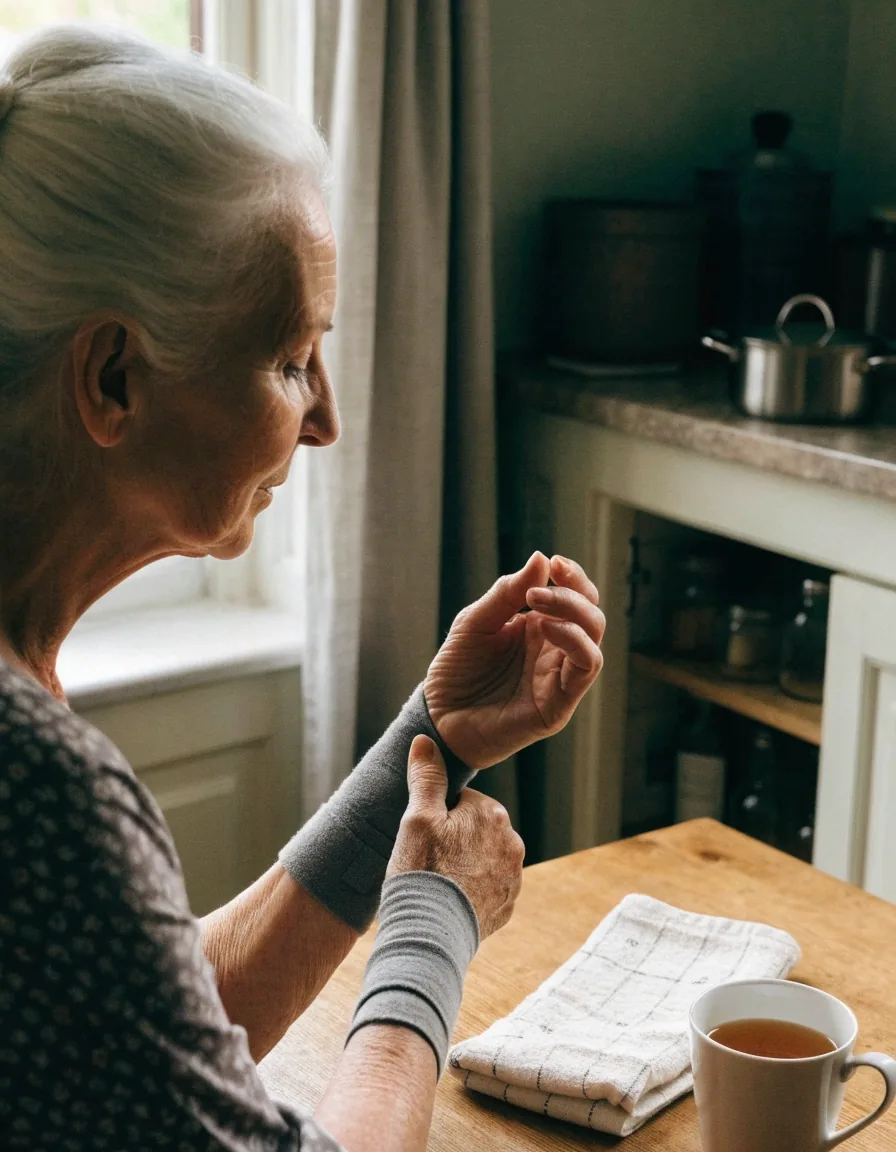

Knee supports and when structure helps
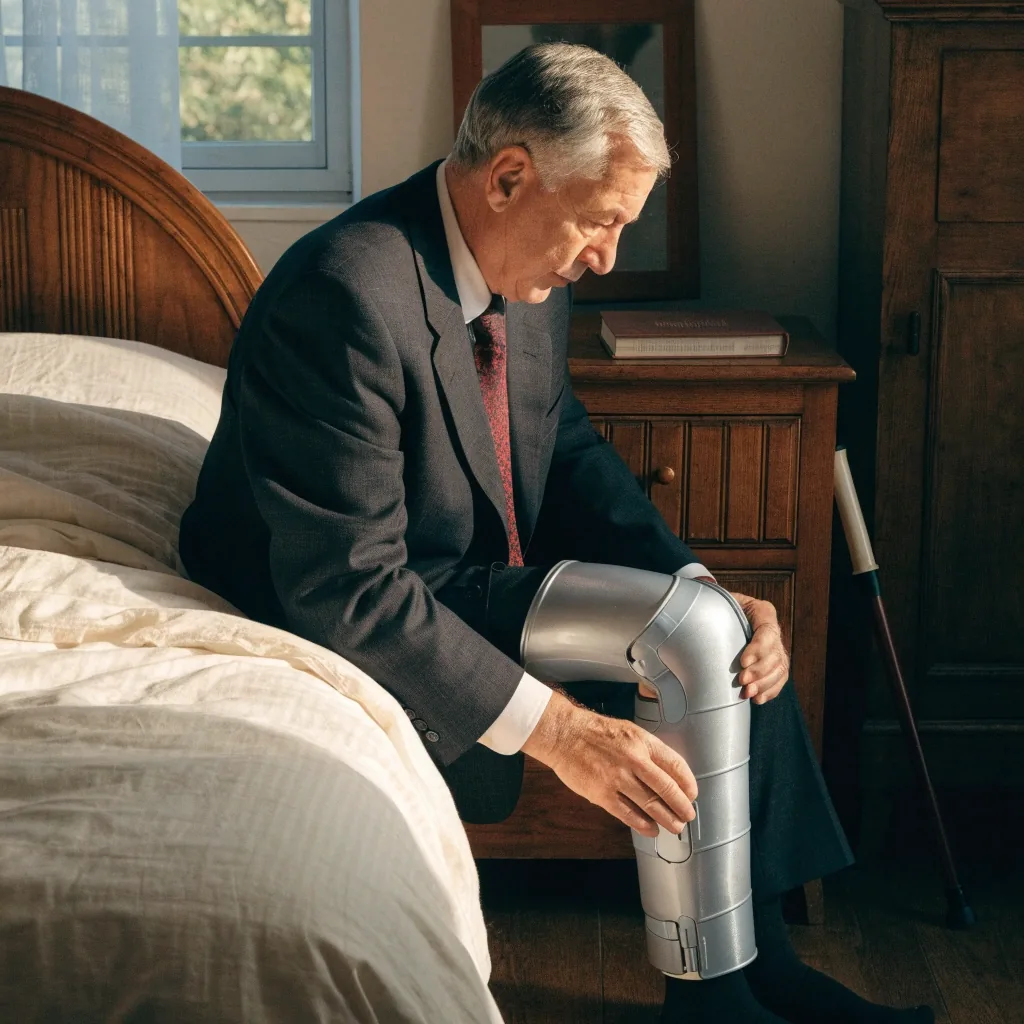
A plain sleeve gives warmth and light compression. A structured support adds stability, which matters if the knee feels as though it might give way mid-activity. The Bauerfeind GenuTrain A3 sits in the structured category, presented by the company as a usual starting point for general knee support, and listed in its osteoarthritis supports collection. Bauerfeind states that supports are for managing pain and instability during activity.
That same page is clear that there is no cure and that supports do not reverse change in a joint. It is worth reading that line twice, because it is a good standard to hold every other product to.
Plain sleeve
Warmth and light compression around the knee. Comfortable for desk work, driving and long days on your feet where nothing feels unstable.
Structured support
Panels or hinges add shape and limit movement in one direction. Choose this when stairs, slopes or uneven ground are the moments that worry you.
How to tell which you need
Notice the moment the knee lets you down. If it aches steadily with no loss of steadiness, a sleeve is usually enough to start. If it buckles, jumps or feels unreliable on stairs, the structure is the part doing the work. A knee pain solution for one person is often the wrong category for the next, which is why the moment matters more than the product name.
Choosing between them
Pick the joint that limits you most
Buy one thing and use it for a fortnight. If it does not change your day, move to a different category rather than a more expensive version of the same one. Our daily living aids page covers the tools that take strain off a task, and those sometimes solve the problem better than a support does.
Two weeks is enough to tell whether an aid is helping. After that, a different category is usually a better spend than a costlier version of the same one.
Your main problem
Category to try first
Why it fits
-
Hands stiff and puffy in the morning
Compression gloves
Light, even pressure through the fingers and palm, warm enough to wear through a task. Enough for joint pain aid without limiting what your hand can do.
-
Wrist aches through repetitive work
Wrist supports
Warmth and gentle pressure across the wrist while chopping, cleaning or typing, then off again. Helps you keep two hands on the job instead of stopping.
-
Knee feels unsteady on stairs
Structured support
Rigid panels add steadiness in the direction that worries you. A useful knee pain solution when the problem is stability during movement rather than a constant ache.
-
General stiffness, nothing gives way
Warmth alone
A simple sleeve or warm layer before you move. If there is no instability, structure adds nothing except weight and cost.
-
Reaching, gripping and dressing are the hard part
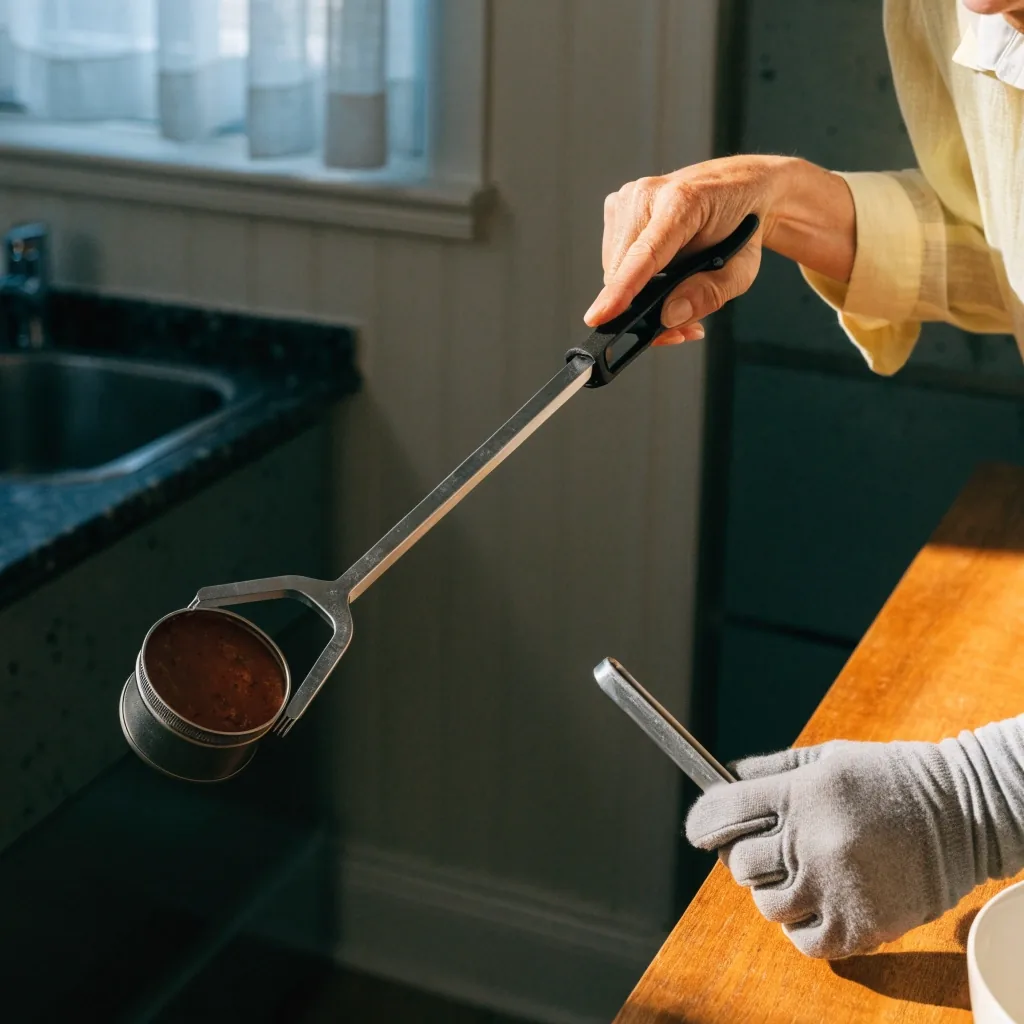
Grabbers and adapted tools
Sometimes the task, not the hand, is the problem. Reducing the effort beats wrapping the hand tighter. See daily living aids.
Sizing and fitting
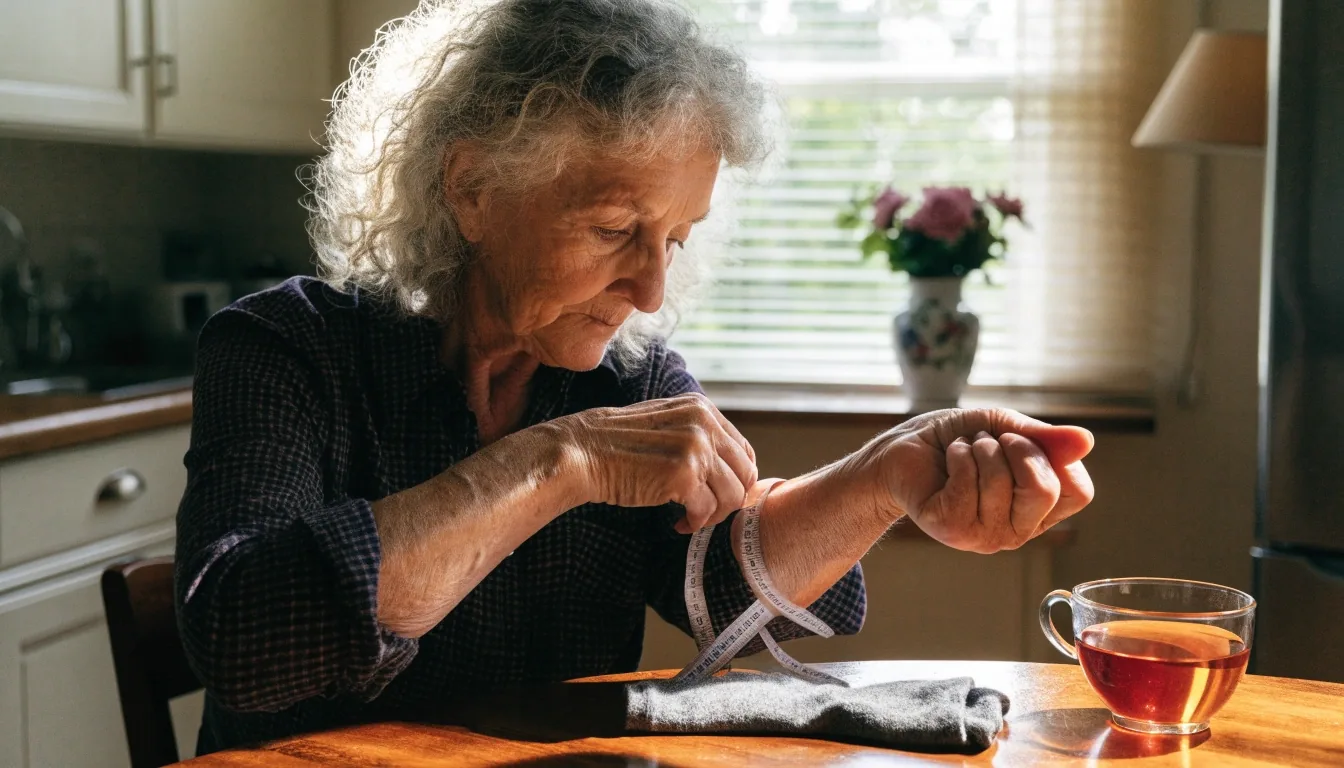
Fit matters more than brand. Compression should feel firm and even, never tight, and it should not leave deep marks or change the colour of your fingers.
Measure, do not guess
Most manufacturers publish guides based on wrist or knee circumference. A soft tape measure around the narrowest point of the wrist, or around the centre of the knee with the leg straight, gets you into the right size band. If you land between two sizes, the larger one is usually the safer first purchase, especially when swelling shifts through the day.
Signs the fit is wrong
If a finger or wrist throbs, tingles or goes numb, take the aid off. Deep grooves in the skin after twenty minutes, or fingers that look paler than the other hand, mean the size is too small rather than the support too weak. Re-measure and step up a size before you give up on the category.
When to wear them, and when to take them off
Use supports during the activity that needs them rather than all day. There is no gain in wearing a wrist support while watching television, and continuous wear over months can allow the surrounding muscles to do less work than they should.
Wear it for the task
Put it on before the job that irritates the hand, wrist or knee and take it off when the job is done. This is where most of the practical value sits.
Exceptions exist
Some people find a light compression glove helpful through the night when hands stiffen by morning. Worth trying, as long as it stays comfortable and you are not waking with marks on your skin.
The pattern that helps most
Put a support on, then use the joint. Wearing one through easy movement you would have done anyway rarely changes anything. Wearing one so that chopping, walking or dressing feels manageable — and doing it more often as a result — is where the two habits start to work together. If a support lets you support joints daily through ordinary activity, it is doing its job. If it becomes a reason to move less, it is working against you.

What supports do not do
Supports do not reverse changes that have already happened in a joint. Makers of structured knee supports say so directly, and it is a good standard to hold every product to. If a page suggests a brace will restore anything, treat the page with suspicion rather than the joint with hope.
They also do not replace movement. The results people describe doing well usually come from using a support to make activity comfortable enough to keep doing, rather than using it as a reason to do less. That combination is where the practical value sits, and it is the honest way to think about restore joint mobility or support joints daily as goals — they describe a direction of travel, not a switch you flip on the shelf.
What an aid can reasonably do
Make a task feel manageable, keep warmth on a stiff hand or knee, and give steadiness where a joint feels unreliable.
What it cannot promise
Undoing wear, making discomfort vanish, or standing in for movement, graded activity or advice from a professional.
Questions people ask
Practical answers before you buy
If the answer you need is not here, write to us and we will point you at the right page or the right professional.
Can I wear a compression glove to bed?
Sometimes, yes. A light glove worn overnight suits people whose hands stiffen badly by morning. Keep it comfortable, and if you wake with deep marks, numbness or fingers that have changed colour, either loosen the fit or leave it off and try a different aid during the day instead.
Should I buy a knee sleeve or a structured support?
Start from the moment that worries you. A sleeve gives warmth and gentle pressure, which suits steady aching during long days. Structured supports add panels or hinges that steady the knee when it feels like it might give way, so they suit stairs, slopes and uneven ground. If money only stretches to one, the structured option is usually the more useful first buy when instability is the issue.
How do I know a support is the wrong size?
Three signs: it takes real effort to get on, it leaves deep grooves within twenty minutes, or a finger, hand or foot changes colour or goes numb. Any of those means step up a size. Firm and even is the target; tight is not the same thing.
Do bath steps and grabbers belong on this page?
They belong next to it. A bath step, a reacher or a jar opener changes how much strain a task puts through your hands and knees, which is a different way of solving the same problem. The daily living aids page walks through those tools in detail.
How long should I give one aid before trying another?
A fortnight of regular, honest use tells you most of what you need to know. If your day has not changed at all in that time, move to a different category rather than buying a dearer version of the same one. If it helps a little, keep going and note which tasks improve — that list is useful if you later speak to a professional.
Start with one aid, and one fortnight
Pick the joint that limits you most, buy one thing, and see whether your day changes. If you would rather talk it through first, send us a question and we will answer plainly — including the times we think the answer is somewhere other than a support.
Calverley Timber Works, 14 Calverley Road, Tunbridge Wells, Kent TN1 2TH. Open Monday to Friday, 9:00 AM – 6:00 PM, and Saturday, 10:00 AM – 2:00 PM. You can also reach us on +44 1273 338975 or at [email protected].